Loren Lisk


One Agent Asks, Several Agents Agree
AI Consensus Prototype Dec 2025
What it is
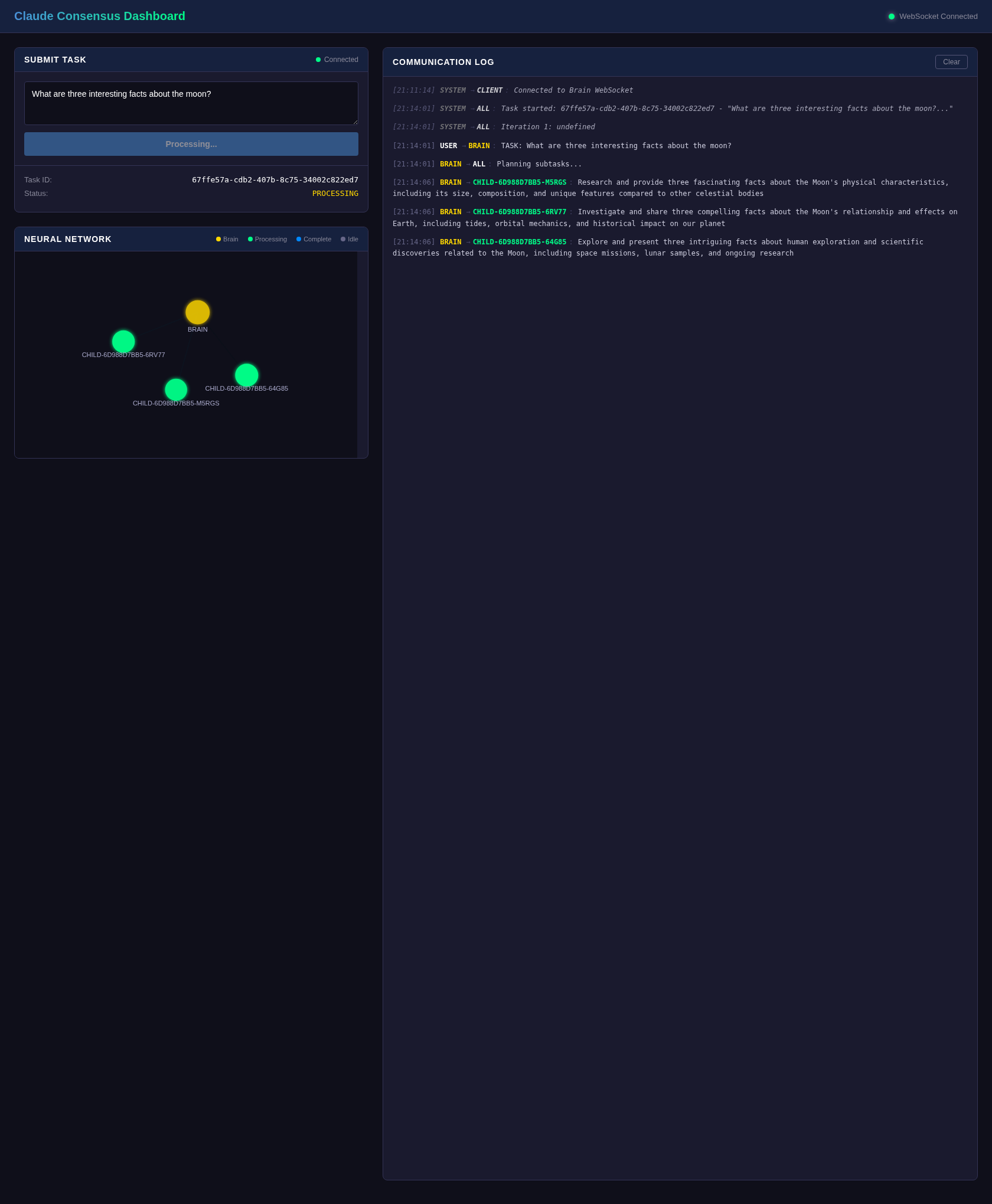
ai-consensus-poc is a prototype built in December 2025. A Go brain service takes a prompt, uses Claude to break it into subtasks, and fans those subtasks out to a pool of child Claude agents. The children are a single Kubernetes Deployment, so adding more is a matter of scaling its replicas. Each child sends its answer back to the brain, which reviews the results and either synthesizes a final answer or sends out refined questions for another round. It keeps iterating until the children reach consensus, capped at 10 iterations.
How consensus works
The brain does not wait for every child. It waits for a quorum: a majority of the children it handed subtasks to that round must respond before it moves on. It then runs a 4-step analysis over the responses:
- Identify claims - pull the key claims out of each child's response
- Compare agreement - check how far those claims line up across children
- Evaluate consensus strength - grade it as strong consensus, weak consensus or no consensus
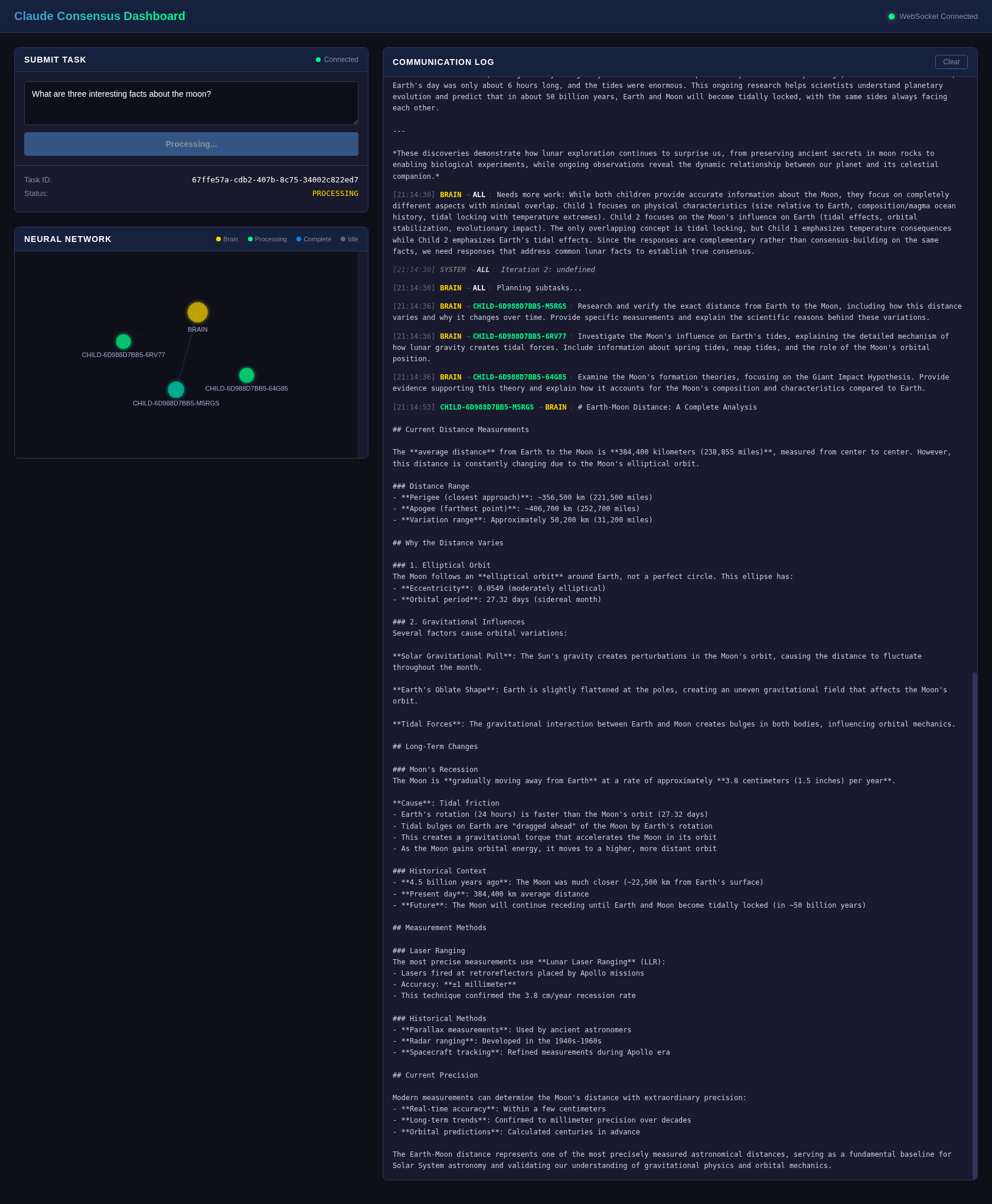
- Decide the next step - synthesize the final answer, or write refined questions that target the disagreements and start another iteration
Architecture
                  prompt
                    |
                    v
       +-------------------------+
       |          BRAIN          |<-----------------------+
       |  1. plan subtasks       |                        |
       |  2. wait for quorum     |                        |
       |  3. review: 4-step      |                        |
       |     consensus analysis  |                        |
       +------------+------------+                        |
                    |  subtasks                           |
      +-------------+-------------+-------------+         |
      |             |             |             |         |
      v             v             v             v         |
 +---------+   +---------+   +---------+   +---------+    |
 | child-1 |   | child-2 |   | child-3 |...| child-N |    |
 +----+----+   +----+----+   +----+----+   +----+----+    |
      |             |             |             |         |
      +-------------+------+------+-------------+         |
                           |                              |
                           +---- results -----------------+

        no consensus yet? refined questions go back out
        (at most 10 iterations), otherwise final answer
Stack
- Go services - a brain orchestrator and a child agent service, calling Claude through the Anthropic Go SDK
- Event bus - an internal bus that broadcasts messages, node and edge updates, task start and end, and iteration events
- WebSocket hub - streams those events live to the dashboard
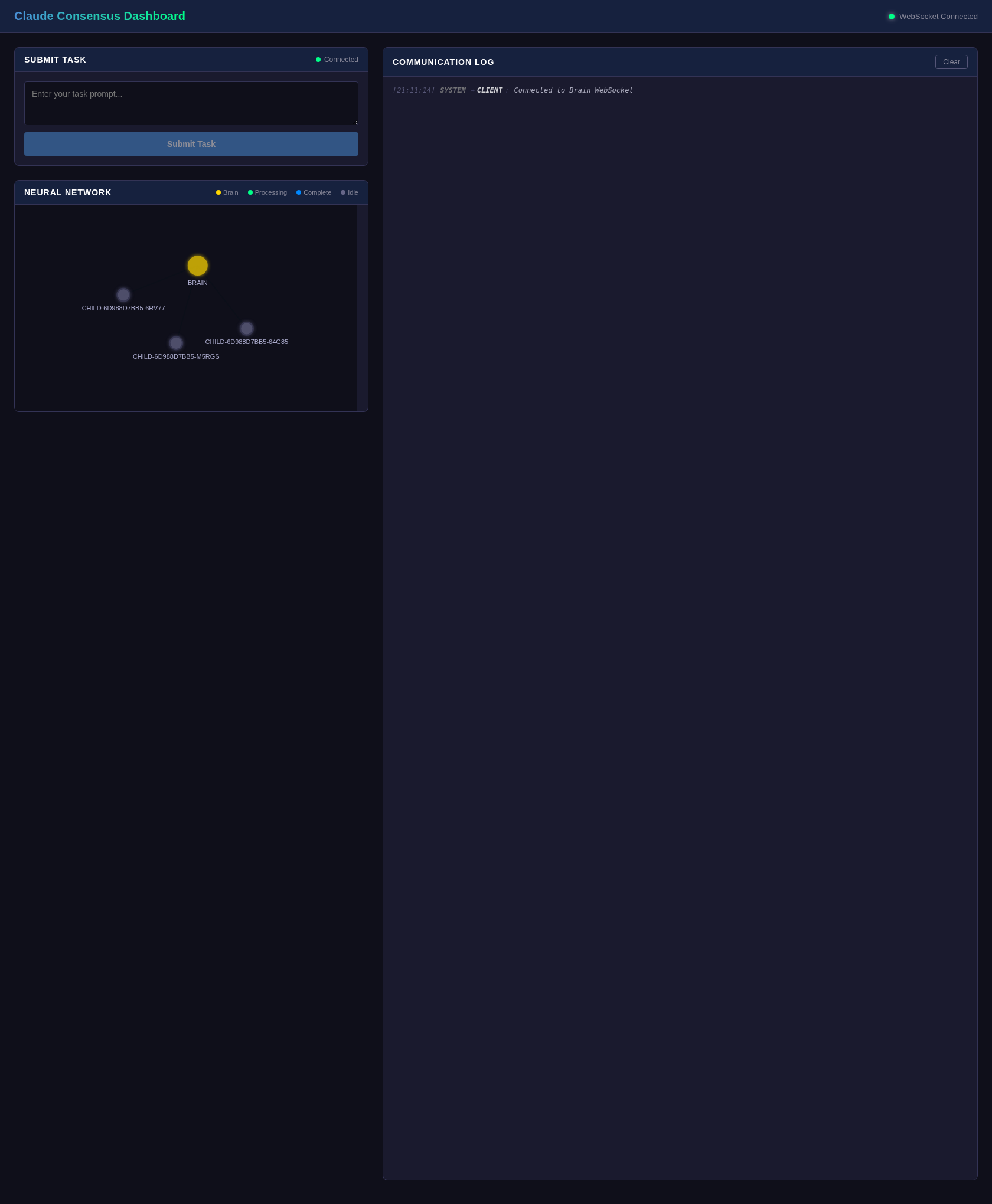
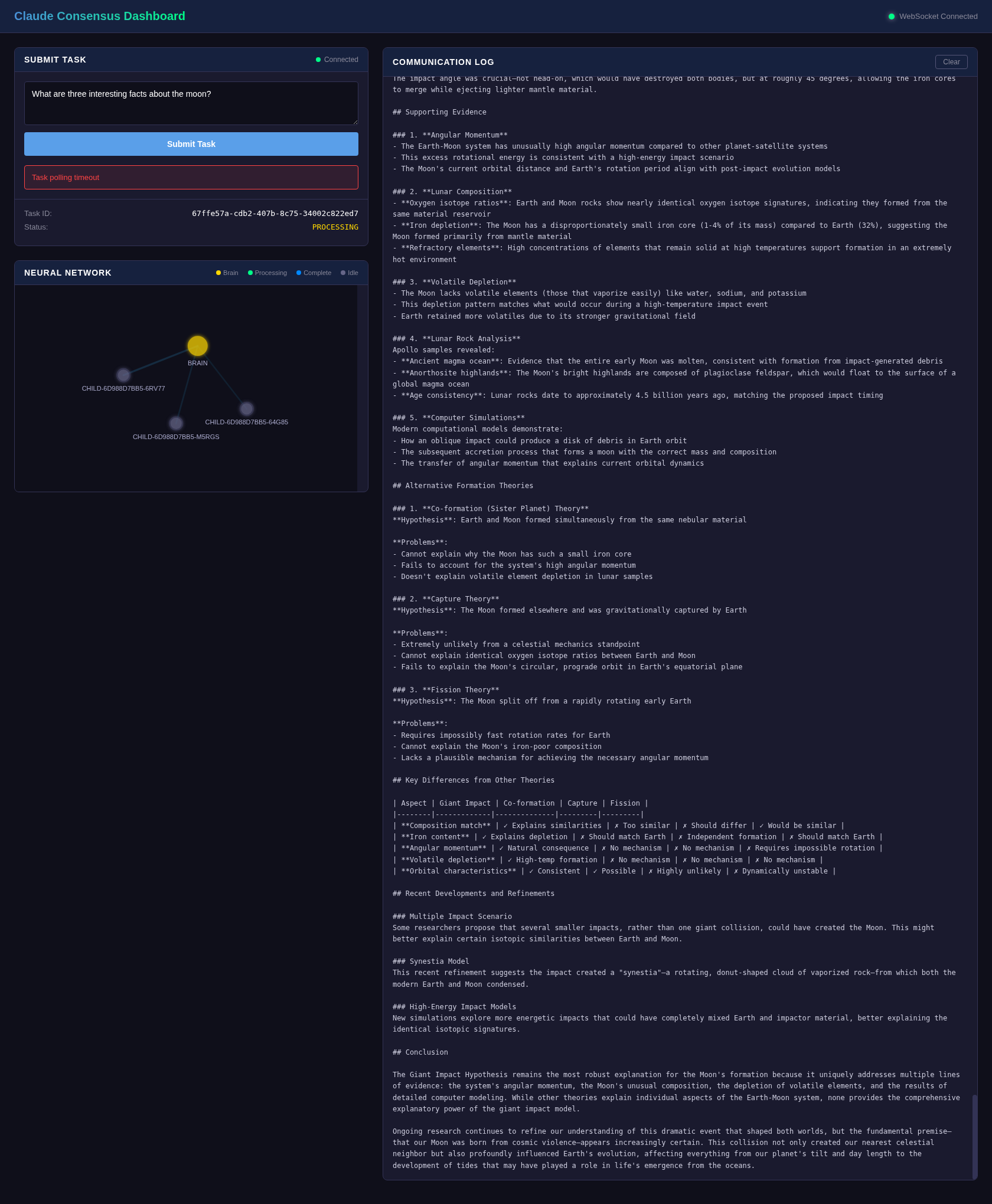
- React dashboard - an IRC-style communication log next to a neural-network graph view of the brain and its children
- Per-child model selection - click a child node in the graph to pick which Claude model it runs
- Kubernetes - manifests for the brain, the child Deployment and the dashboard
- SOPS - secrets kept encrypted in the repo
Screenshots
One run of the sample prompt "What are three interesting facts about the moon?" against three children.
Source
The code, manifests and setup notes are on GitHub: github.com/liskl/ai-consensus-poc.